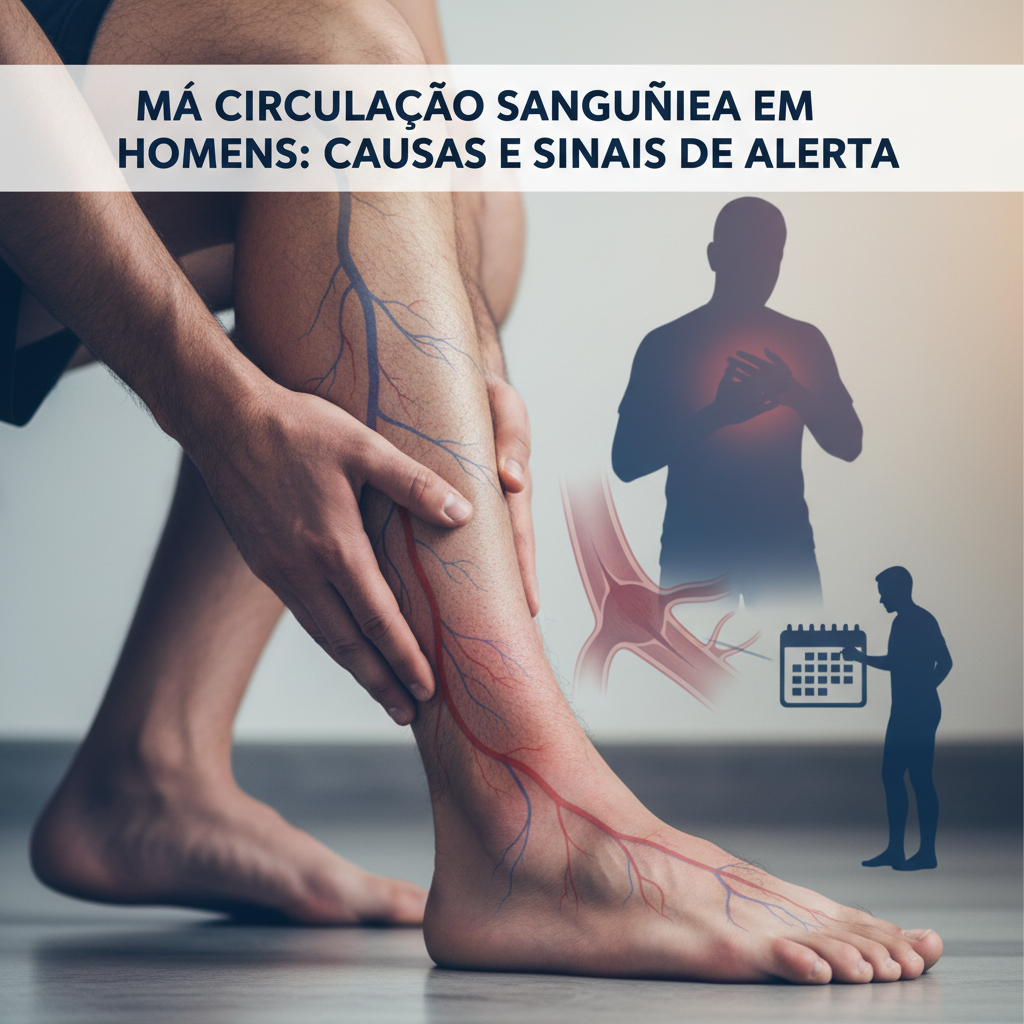
Poor blood circulation in men is a common, yet often underestimated, health issue that can lead to serious complications if not diagnosed and treated early.
Understanding what it is, its underlying causes, and the warning signs is crucial for maintaining good quality of life and preventing adverse outcomes.
This article will delve into the topic, exploring everything from physiological mechanisms to prevention and treatment strategies.
The circulatory system is the body’s transport network, responsible for delivering vital oxygen and nutrients to all cells and tissues while removing metabolic waste products.
When this system operates inefficiently, whether due to obstruction, narrowing, or weakening of blood vessels, it is referred to as poor circulation. In men, specific lifestyle and biological factors can exacerbate this problem, making awareness even more critical.
Therefore, we will explore the main causes and signs that should not be ignored.
👉 See how circulatory problems also affect women’s legs.
What is Poor Circulation in Men? Understanding the Vascular Problem
Poor circulation, clinically known as circulatory insufficiency, occurs when blood flow to a part of the body is inadequate. In men, this can manifest in various ways, primarily affecting the extremities such as legs and feet, but also vital organs like the heart, brain, and kidneys.
The circulatory system consists of arteries that carry oxygenated blood from the heart to the body, and veins that return blood to the heart. Any disruption in this cycle can lead to serious health issues.
The condition can be chronic or acute, depending on its origin and how quickly it develops. The causes are multifactorial and often interrelated, involving both genetic predispositions and lifestyle habits.
Early detection is key to preventing the progression of the disease and its potentially devastating consequences.
Main Causes of Poor Blood Circulation in Men
Several factors contribute to the development of poor blood circulation in men. Knowing these causes is the first step towards effective prevention and management. We will analyze the most common ones and how they impact the male vascular system.
Sedentary Lifestyle and Habits
Sedentary lifestyle is, undoubtedly, one of the biggest causes of modern circulatory problems. Lack of regular physical activity reduces the heart’s pumping efficiency and weakens blood vessel walls.
Men with professions requiring long periods of sitting or standing have an elevated risk. The human body is designed for movement; without it, circulation stagnates, favoring plaque buildup and clot formation.
In addition to inactivity, a diet rich in saturated fats, sugars, and sodium contributes to increased cholesterol and blood pressure, factors that damage arteries over time.
Smoking is another relentless enemy of circulation, as the toxic substances in cigarettes narrow blood vessels and increase the risk of atherosclerosis.
Age: An Inevitable Risk Factor
With advancing age, arteries naturally lose elasticity and become stiffer and narrower, a process called arteriosclerosis. This impedes blood flow and increases pressure on the vessels.
While a natural process, age acts as a catalyst for other causes, making older men more susceptible to circulatory problems. It’s important to note that although age is a factor, a healthy lifestyle can mitigate its effects.
Associated Chronic Diseases
Several chronic diseases are directly linked to poor circulation:
- Diabetes Mellitus: High blood sugar damages nerves and blood vessels, especially small ones, leading to peripheral neuropathy and atherosclerosis, which is the main cause of poor blood circulation in men with diabetes.
- High Blood Pressure (Hypertension): Elevated blood pressure forces blood against artery walls, damaging the inner lining of vessels and promoting plaque buildup.
- High Cholesterol: High levels of LDL (‘bad’ cholesterol) contribute to the formation of fatty plaques in arteries (atherosclerosis), narrowing them and obstructing blood flow.
- Peripheral Artery Disease (PAD): A common condition where narrowing of the arteries in the legs and arms causes pain, numbness, and, in severe cases, tissue death.
- Obesity: Obesity is linked to various conditions that affect circulation, such as diabetes, hypertension, and high cholesterol, in addition to placing extra stress on leg veins.
Genetics and Family History
Genetic predisposition plays a significant role. If there is a family history of cardiovascular disease, atherosclerosis, or blood clots, the risk of developing poor blood circulation in men is higher. In such cases, vigilance and early adoption of preventive measures are even more important.
Warning Signs of Poor Blood Circulation in Men That Should Not Be Ignored
Detecting signs of poor circulation early is crucial to prevent serious complications. Many of these symptoms can be mistaken for natural aging or fatigue, but ignoring them can be dangerous. Pay attention to the following indicators:
1. Leg Pain and Cramps (Intermittent Claudication): This is one of the most classic symptoms of Peripheral Artery Disease (PAD). Pain, usually in the calves, thighs, or buttocks, appears during walking or exercise and subsides with rest. The intensity and distance one can walk before pain occurs are indicators of the condition’s severity.
2. Swelling (Edema) in Legs, Ankles, and Feet: Fluid accumulation in tissues, especially in the extremities, can be a sign that blood is not returning efficiently to the heart or that there are kidney problems. Swelling usually worsens throughout the day and improves with leg elevation.
3. Numbness, Tingling, or Cold Sensation in Extremities: Lack of adequate blood flow can cause a sensation of numbness, tingling, or ‘pins and needles’ in the hands and feet. The skin in these areas may feel cold to the touch, even in warm environments, due to decreased superficial temperature caused by poor perfusion.
4. Changes in Skin Color: The skin on the legs and feet may acquire a bluish (cyanosis) or purplish discoloration due to lack of oxygenation. In some cases, it may appear pale or shiny. Wounds that are slow to heal are also a worrying sign.
5. Wounds or Ulcers That Don’t Heal: Poor circulation reduces the body’s ability to heal. Small cuts, scratches, or blisters on the feet and legs can develop into chronic, slow-healing ulcers, increasing the risk of severe infection and even amputation in extreme cases.
👉 Attention, as these symptoms can also occur in women – compare the signs!
6. Hair Loss on Legs and Brittle Nails: Impaired nourishment of hair follicles on the legs and nail beds can lead to hair loss and the weakening or thickening of toenails.
7. Erectile Dysfunction: In men, poor circulation can be an underlying cause of erectile dysfunction. Inadequate blood flow to the penis makes it difficult to achieve and maintain an erection, and this can be one of the earliest warning signs of broader vascular problems.
8. Varicose Veins: Although visible, varicose veins are dilated and tortuous veins indicating a problem in the venous system, where valves can no longer prevent blood reflux. While not always a sign of arterial poor circulation, they can indicate venous compromise which, if left untreated, worsens overall circulation.
When to Seek Medical Help?
If you experience one or more of these signs, it’s essential to consult a doctor, preferably an angiologist or cardiologist. Early diagnosis can prevent serious complications and significantly improve the prognosis. Do not wait for symptoms to worsen.
Diagnosis and Tests to Evaluate Poor Blood Circulation
The diagnosis of poor blood circulation in men usually begins with a detailed clinical evaluation, including a complete medical history and physical examination. The doctor may check for pulses in peripheral arteries, observe skin color and temperature, and identify the presence of swelling or lesions.
Among the most common supplementary tests are:
- Ankle-Brachial Index (ABI): A simple, non-invasive test that compares blood pressure measured at the ankle with pressure measured in the arm. A low ABI (<0.9) is a strong indicator of PAD.
- Vascular Ultrasound (Duplex Scan): Uses sound waves to create images of blood vessels, allowing visualization of blood flow, and identification of narrowing, obstructions, or aneurysms.
- Angiography: A more invasive procedure that uses contrast dye and X-rays (or MRI/CT) to obtain detailed images of arteries, revealing blockages.
- Blood Tests: To check cholesterol levels, glucose (diabetes), and other inflammatory or coagulation markers.
Treatment Options for Poor Circulation in Men
Treatment for poor blood circulation in men depends on the underlying cause and the severity of the condition. The primary goal is to alleviate symptoms, prevent disease progression, and reduce the risk of serious complications such as heart attacks, strokes, and amputations.
Lifestyle Changes
For mild to moderate cases and as a form of prevention, lifestyle changes are the first line of defense:
- Regular Physical Exercise: Walking, swimming, cycling, or any supervised aerobic activity improves blood flow, strengthens the heart, and aids in weight control.
- Healthy Diet: A diet rich in fruits, vegetables, whole grains, lean protein, and low in saturated and trans fats, sodium, and sugars can reduce cholesterol, blood pressure, and the risk of diabetes.
- Quit Smoking: Essential for vascular health. Quitting smoking is the most effective measure to slow the progression of PAD and other circulatory diseases.
- Weight Management: Maintaining a healthy weight reduces the burden on the circulatory system and lowers the risk of associated diseases like diabetes and hypertension.
- Stress Management: Prolonged stress can affect blood pressure and cardiovascular health. Relaxation techniques like yoga or meditation can be helpful.
Medications
Medications may be prescribed to control underlying conditions and improve blood flow:
- Antiplatelet Agents: Aspirin or clopidogrel to prevent blood clot formation and reduce the risk of cardiovascular events.
- Statins: To lower LDL cholesterol levels.
- Antihypertensives: To control blood pressure.
- Hypoglycemic Agents: To control blood sugar in diabetic patients.
- Vasodilators: Such as cilostazol, may be prescribed to relieve the pain of intermittent claudication.
Procedures and Surgeries
In more advanced cases, where there is significant arterial narrowing or obstruction, more invasive procedures may be necessary:
- Angioplasty and Stenting: A balloon is inserted and inflated to open the narrowed or blocked artery. Then, a stent (a small metal mesh) may be placed to keep the artery open.
- Bypass Surgery: A graft, usually a segment of a vein from another part of the body, is used to create a detour around the blocked artery, restoring blood flow.
- Atherectomy: A procedure to remove plaque from the artery.
Prevention of Poor Blood Circulation in Men: A Continuous Commitment
Prevention is the fundamental pillar to avoid the development or progression of poor blood circulation in men. Adopting a proactive and conscious lifestyle can make a huge difference in long-term vascular health.
- Regular Check-ups: Annual medical check-ups to monitor blood pressure, cholesterol, blood glucose, and other risk factors are essential, especially after age 40.
- Consistent Physical Activity: Aim for at least 30 minutes of moderate aerobic activity most days of the week. This strengthens the heart and improves overall circulation.
- Balanced Diet: Prioritize fresh, minimally processed foods. Reduce consumption of red meat, full-fat dairy, fried foods, and processed products.
- Chronic Disease Management: If you already have diabetes, hypertension, or high cholesterol, strictly follow the treatment plan prescribed by your doctor.
- Avoid Smoking and Excessive Alcohol Consumption: These are two of the biggest aggressors to the circulatory system. Smoking cessation is the most effective intervention to improve vascular health.
- Adequate Hydration: Drinking enough water helps keep blood less viscous, facilitating its flow through vessels.
Poor blood circulation in men is not a sentence, but a warning from the body about the need for care. By understanding the causes, recognizing warning signs, and adopting preventive measures, it is possible to protect vascular health and enjoy a full and active life. Do not neglect your body’s signals and always seek professional medical guidance. Your circulation is the engine of your life – take good care of it!
👉 Also learn about the female perspective on vascular health and compare.